
Socotra | Yemen
Date of Our Trip: December 26, 2025 – January 8, 2026
Have you ever seen a photo of a place that looks so alien, so otherworldly, that you’re convinced it was generated by AI or snapped on a different planet? For us, that place was Socotra. We decided to ring in the New Year of 2025 in the most unique destination we could imagine, and from December 26th to January 8th, we embarked on what we thought would be a 12-day adventure. It turned into an 18-day journey we will never forget—not because of the landscapes, though they are unmatched, but because of the people who turned a moment of geopolitical crisis into a profound lesson in humanity.
Where is Socotra?
Let’s start with the basics, because chances are, you had to Google it, too. Socotra, also spelled Soqotra, is a Yemeni island floating in the Arabian Sea, about 380 kilometers (240 miles) south of the Arabian Peninsula and about 232 kilometers east of the Horn of Africa. It is the largest of four islands in the Socotra Archipelago.
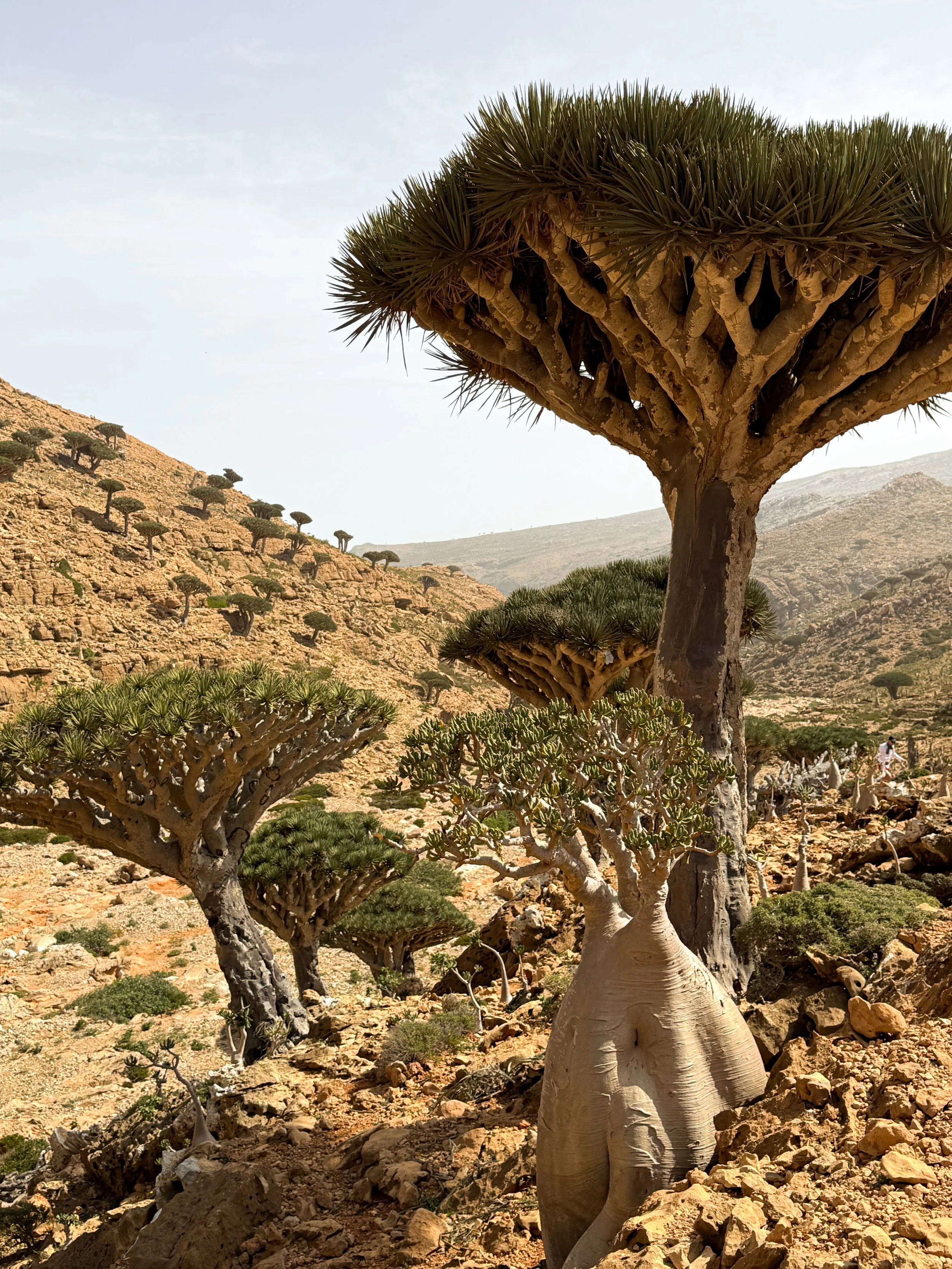
Politically, it belongs to Yemen, but geographically, it is a piece of Africa, detached from the continent millions of years ago . This long geological isolation is precisely what makes it so bizarre and beautiful. Because it’s been separated from the mainland for so long, a third of its plant life is found: nowhere else on Earth.. In 2008, UNESCO recognized this unique biodiversity by naming it a World Heritage Site . Often called the "Galápagos of the Indian Ocean," it is home to the famous Dragon's Blood Tree, which looks like a giant, upturned umbrella, and the Desert Rose - “Bottle Tree”, a fat, rubbery tree that blooms pink flowers straight out of the rocks .
A New Year's Eve Like No Other
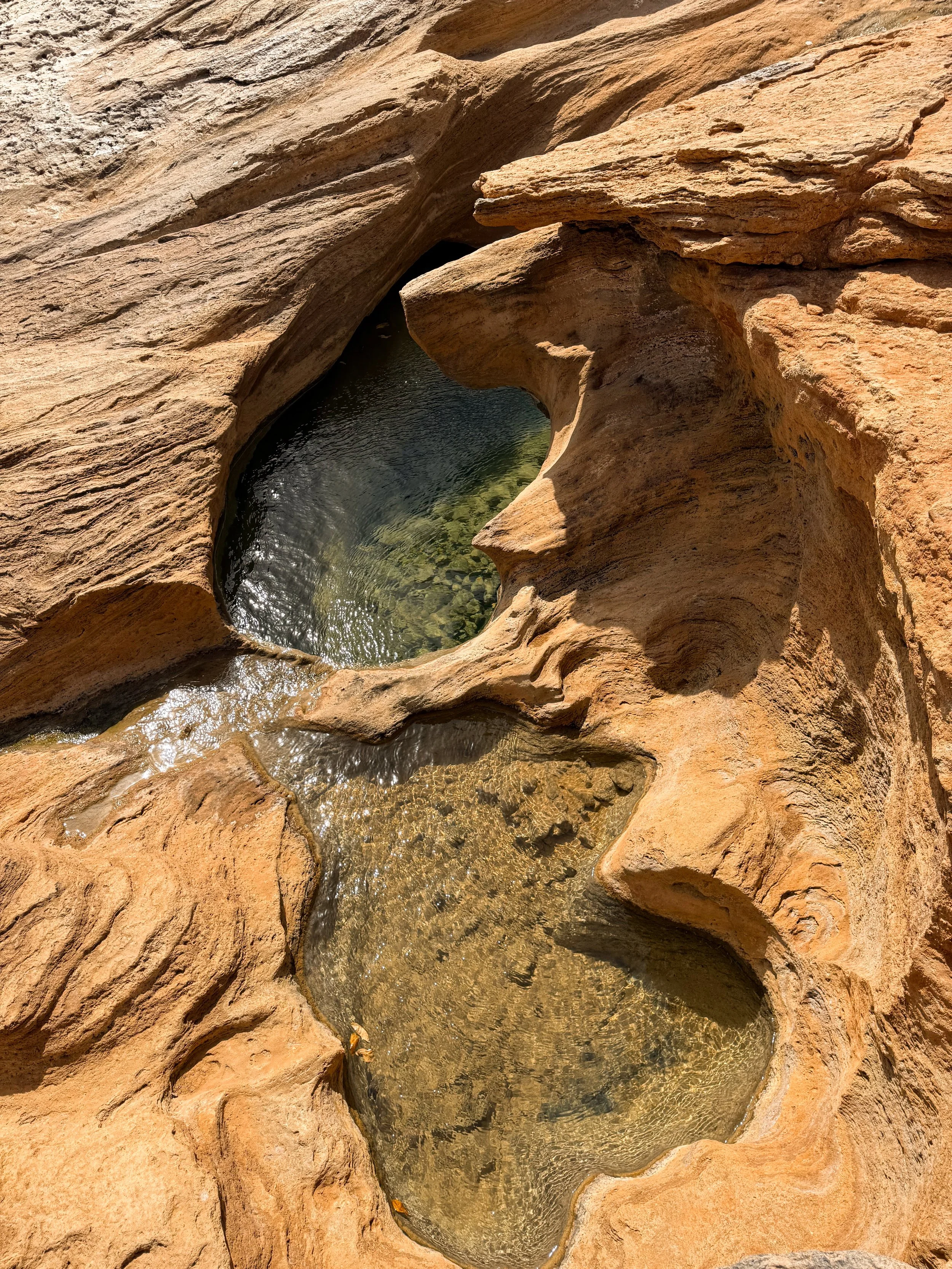
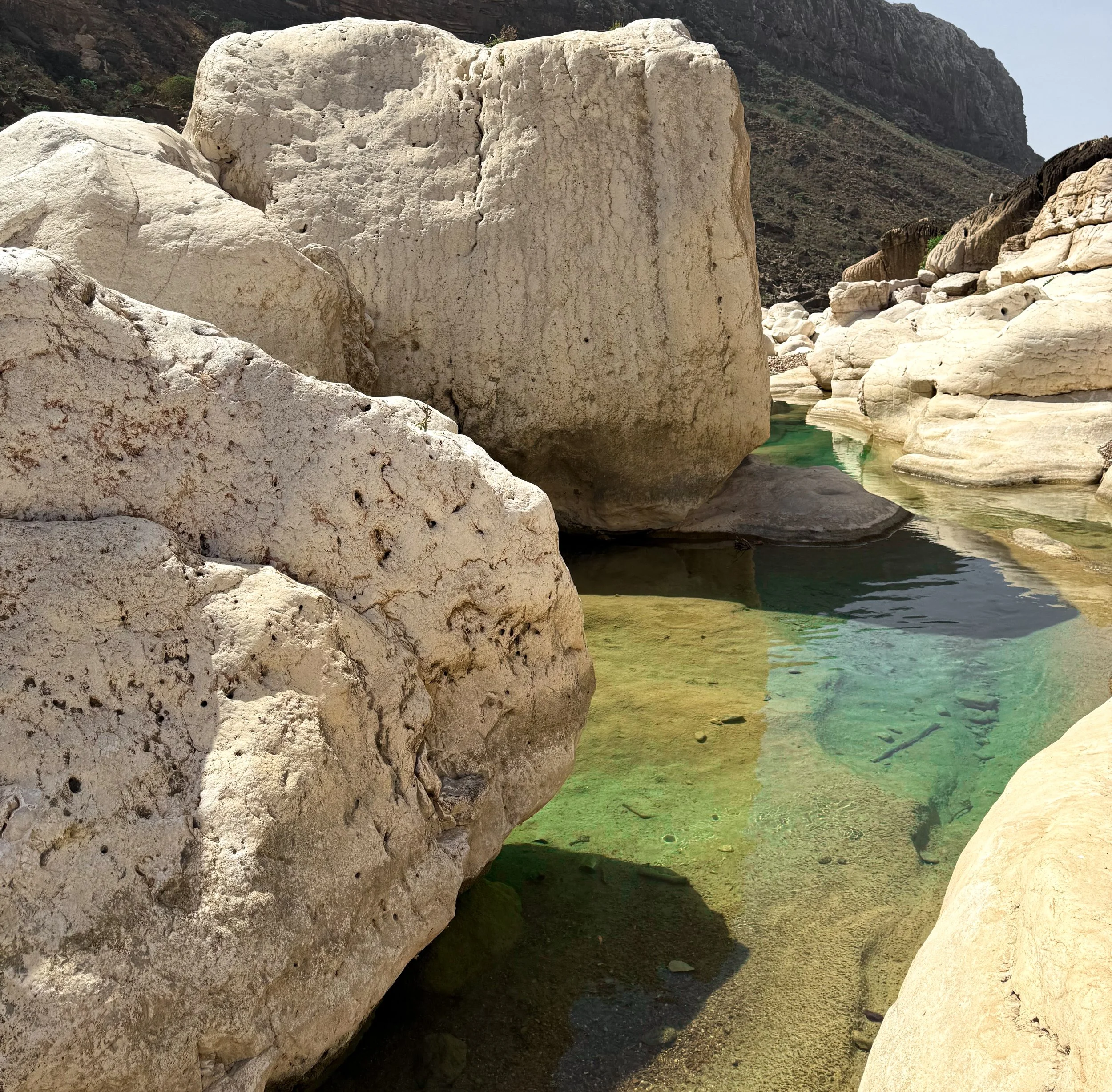
We arrived on December 26th, just in time to settle in for the New Year. We spent our days hiking through the surreal limestone plateaus of Diksam and Firmihin, navigating among forests of ancient Dragon's Blood Trees. We snorkeled in the crystal-clear waters of Dihamri Marine Protected Area, swam in natural infinity pools perched on cliffs overlooking the sea, and camped under some of the darkest, most star-filled skies we have ever witnessed .
Stuck in Socotra
And then, the headlines came to us. Around January 4th, as we were preparing to fly home on the 6th, we learned that a no-flight zone had been declared over the island. Tensions involving the UAE, Saudi Arabia, and the Yemeni mainland had escalated, effectively locking the island down . We were stuck.
I won't lie; the initial feeling was a knot of anxiety. You hear "conflict," "no-fly zone," and "Yemen" in the same sentence, and your mind races. We were foreigners, far from home, on an island with limited infrastructure. What will happen?
“Come as Guests - Leave as Family”
What happened next redefined our understanding of safety and hospitality. The moment our local guides and the villagers realized we couldn't leave, there wasn't a hint of frustration or a scramble to renegotiate prices. Instead, there was a calm, almost immediate, sense of responsibility.
The people of Socotra, the Socotris, simply took us in. They speak an ancient South Arabian language that is only spoken, never written, and their lifestyle has remained largely unchanged for centuries . And their tradition of hospitality is as deep-rooted as their Dragon's Blood Trees.
For the extra days we were stranded, not once did anyone ask us for money. Our drivers continued to take us to new, hidden valleys and beaches, treating us not as clients, but as guests. They even cooked for us for free—grilled fish, chicken with rice and yoghurt, freshly baked bread. We sat with our guides and drivers, drank endless cups of sweet, spiced tea, and shared stories through broken English and warm smiles.
Finding Home in a Crisis
We realized quickly that we were not in danger. We were in the care of a community. The Socotri people have lived on this isolated rock for millennia, surviving monsoons and hardship. They know how to take care of each other, and by extension, they took care of us. They made sure we had a place to sleep, food to eat, and good company.
While the "conflict" was a distant political game playing out in the waters and diplomatic channels, on the ground, there was only peace, generosity, and human connection. The Socotris shielded us from the chaos, providing a cocoon of safety and warmth.
Why You Must Go (And Why You Must Be Responsible)
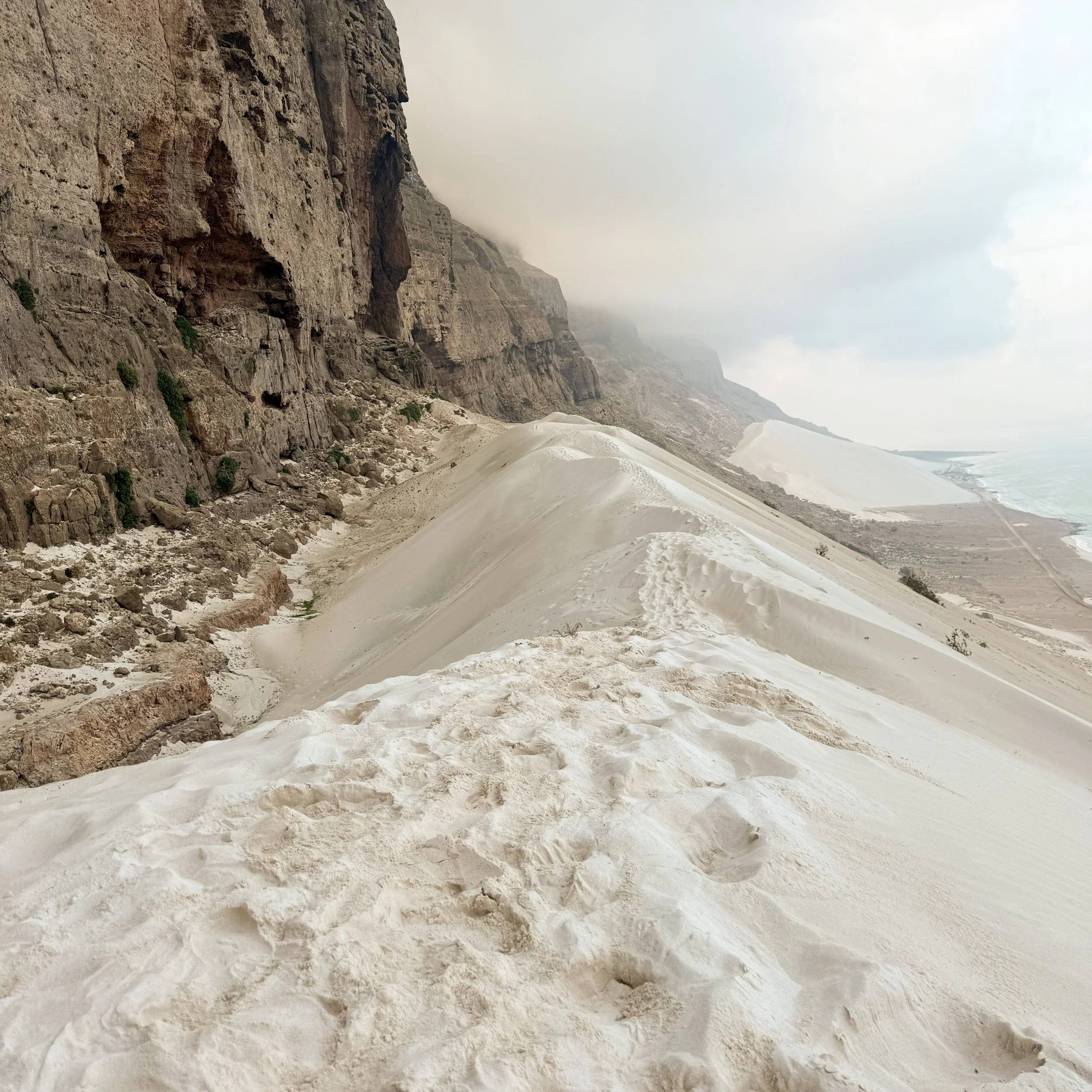
So, would I recommend you travel to Socotra? In a heartbeat. But with your eyes wide open. It is not a luxury resort destination. It is an adventure destination . You will likely camp on beaches, use basic facilities, and you must be prepared for the unexpected—as we learned firsthand. Most of the time you’ll have access to water for showering but keep in mind that it’s almost always cold/room temperature, never hot.
You will be rewarded with sights that rewire your brain: hiking through the "alien" landscape of the Homhil Protected Area, seeing the twisted trunks of ancient trees against a deep blue sky, and swimming in the turquoise waters of Shoab Beach .
More importantly, you will meet the Socotri people. They are the true soul of the island. In a world where tourism can often feel transactional, the people of Socotra reminded us of what it means to be human. They are the reason we felt safe. They are the reason we cried when we finally got news that a relief flight was coming. They are the reason we will absolutely return.
To the drivers who navigated us through wadis, to the women who fed us, to the "caveman of Detwah" who shared his stories with us, and to every single Socotri who turned our potential nightmare into an extended dream: *shukran*. Your home is the most beautiful place on Earth, not just because of the dragon's blood trees, but because of the kindness that flows in your veins .
If you go, travel with a responsible, local operator. Respect their customs, dress modestly, and take nothing but photos . Go to see the otherworldly landscapes, but stay for the human connection. It will change you.
Travel Tips for Your Own Socotra Adventure:
Getting There: Access is usually via charter flights from Abu Dhabi. Be aware that schedules can be unpredictable .
Best Time to Visit: October to December is ideal, avoiding the monsoon season.
Stay: Be prepared for a mix of basic hotels in Hadibu (the capital) and camping in the wild. The camping is the highlight .
Respect: Remember you are a guest. The kindness shown to us is the island's greatest treasure; treat it with care.